
Striped bass life cycle Gaspe peninsula - Gaspesie fishing guide for sport fishing Chaleur Bay

An anadromous fish with a key ecological role
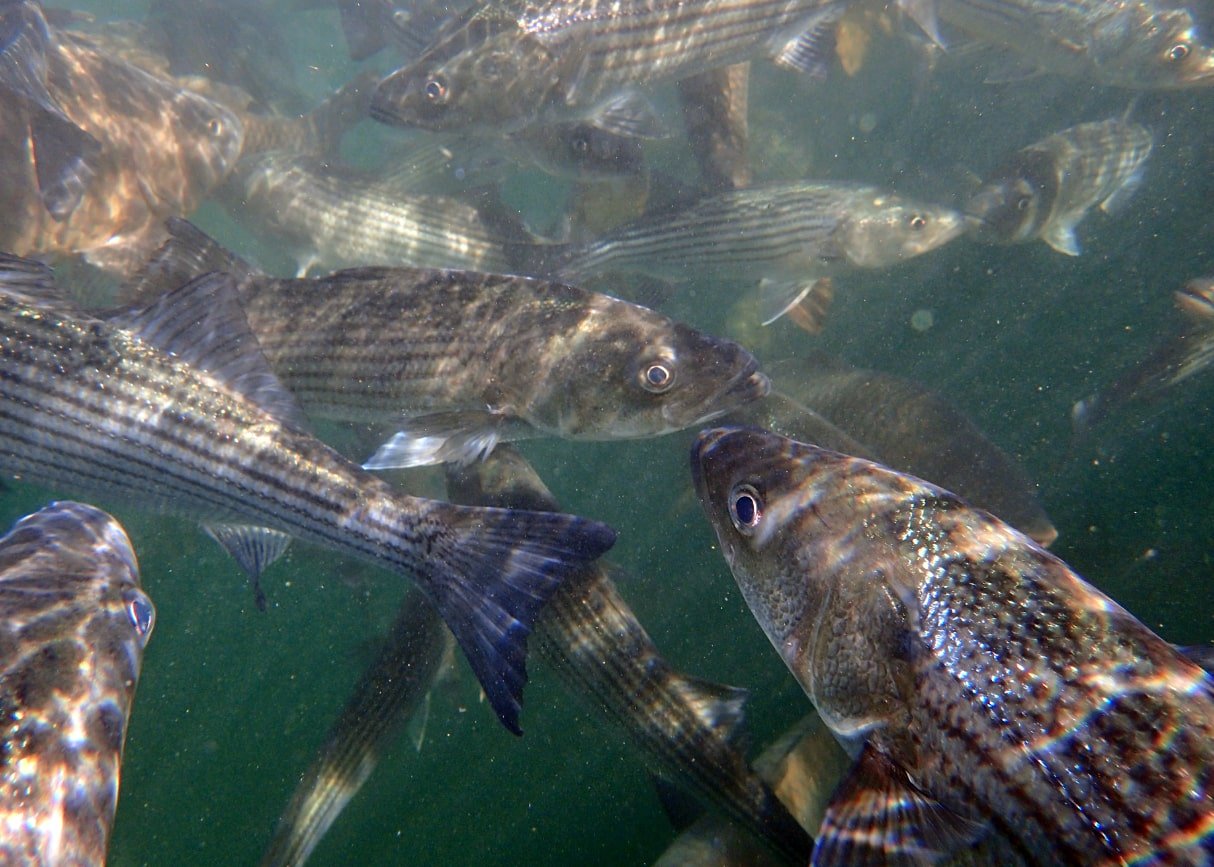
Striped bass is an anadromous species, meaning it breeds in freshwater and grows up in the marine environment (DFO, 2021). In the southern Gulf of St. Lawrence, the main spawning ground is in New Brunswick's Miramichi River, where adults gather in spring. Studies conducted by the Department of Fisheries and Oceans (DFO ) underline the importance of this so-called "southern Gulf" population for the entire Chaleur Bay (DFO, 2019).
Seasonal migration and river spawning
- Spring migration: Each year, as the ice melts (April-May), large shoals of Striped Bass leave their coastal wintering grounds to migrate up the Miramichi River (Bradford et al., 2012). Water temperature must reach around 12-14°C to trigger spawning (DFO, 2021).
- Spawning and protection: Once the spawning ground is reached, females release eggs into the water column while males fertilize them. Authorities then close certain sections of the river to navigation and fishing to avoid disrupting reproduction (DFO, 2019).
- Fry development: Eggs and larvae drift with the current to suitable feeding areas. Only the most resistant fry survive variations in flow, salinity and predation (Cook et al., 2006).

Marine growth and return to Chaleur Bay
- Ascent to the Gulf: After their first phase of life in the river, young striped bass move to the Gulf of St. Lawrence, where they find food (sand eels, herring, small crustaceans) and moderately temperate waters (DFO, 2019).
- Predatory role: As adults, they spend most of the year at sea and play a regulatory role in the coastal ecosystem, controlling the abundance of species such as mackerel and capelin (Parks Canada, 2020).
- Chaleur Bay: In summer, large numbers of striped bass converge on Chaleur Bay to feed, where water temperatures are slightly warmer. Here, they find abundant prey and a nutrient-rich environment (DFO, 2021).
Population fluctuations and fragility
Natural factors
- Temperature and river flows: Springs that are too cold or too dry can affect spawning and egg survival (Bradford et al., 2012).
- Harsh winters: Being at the northern limit of their range, striped bass sometimes suffer significant winter mortalities (DFO, 2019).
Human influences
- Habitat alteration: Bank development, pollution and the presence of dams can disrupt migration or degrade water quality (Cook et al., 2006).
- Fishing and regulations: Sport and commercial fishing must be strictly regulated to preserve the population's resilience (DFO, 2021).
Inventories carried out in 2017-2018 showed a notable decline in the Miramichi population, from around 900,000 individuals to 333,000 (DFO, 2019). Although the margins of error are large, these figures are a reminder of the species' vulnerability.
Reintroduction in the St. Lawrence: a cautious success
The historic St. Lawrence population had almost disappeared by the end of the 1960s due to degradation of spawning grounds and pollution (Robitaille, 2000). In the early 2000s, a DFO-led reintroduction program resulted in the stocking of over 6.5 million striped bass from the Miramichi strain in the river (DFO, 2021). Recent monitoring indicates a gradual recolonization of former habitats, notably near Rimouski and on the north coast (DFO, 2019).
Economic importance and sport fishing
The Striped Bass has become increasingly popular with sport fishermen on the Gaspe peninsula and the Chaleur Bay (Parks Canada, 2020). It generates regional economic spin-offs (accommodation, guiding services), while requiring rigorous management to avoid overexploitation. Its predation on other marine species maintains a valuable ecological balance, making the Striped Bass a key indicator of the health of coastal ecosystems.
Towards a responsible future
Despite positive trends in some populations, the long-term stability of the striped bass remains fragile. Coastal ecosystems are subject to multiple pressures (climate change, pollution, urbanization). DFO and local stakeholders (fishing associations, academics) recommend continued research to better understand migratory dynamics, population genetics and the species' adaptation to environmental variations (DFO, 2019).
Based on this scientific data, it can be seen that safeguarding striped bass in the Chaleur Bay and the St. Lawrence is the result of a delicate balance between conservation, fisheries management and the concerted efforts of all those involved. Its presence remains a strong indicator of the health of aquatic environments in Quebec and the Maritime provinces.
Brief references
- Bradford, R.G., et al. (2012). Biology and management of Striped Bass in Atlantic Canada. DFO Can. Sci. Advis. Sec.
- Cook, A.M., et al. (2006). Influences of water temperature on early life stages of anadromous fish. Fisheries Research Journal.
- DFO (Department of Fisheries and Oceans Canada) (2019-2021). Gulf of St. Lawrence striped bass assessment reports. Government of Canada.
- Parks Canada (2020). Wildlife and marine ecosystem management in Atlantic Canada.
- Robitaille, J. (2000). The decline of striped bass in the St. Lawrence estuary. Rivière et Biodiversité, Vol. 2.
